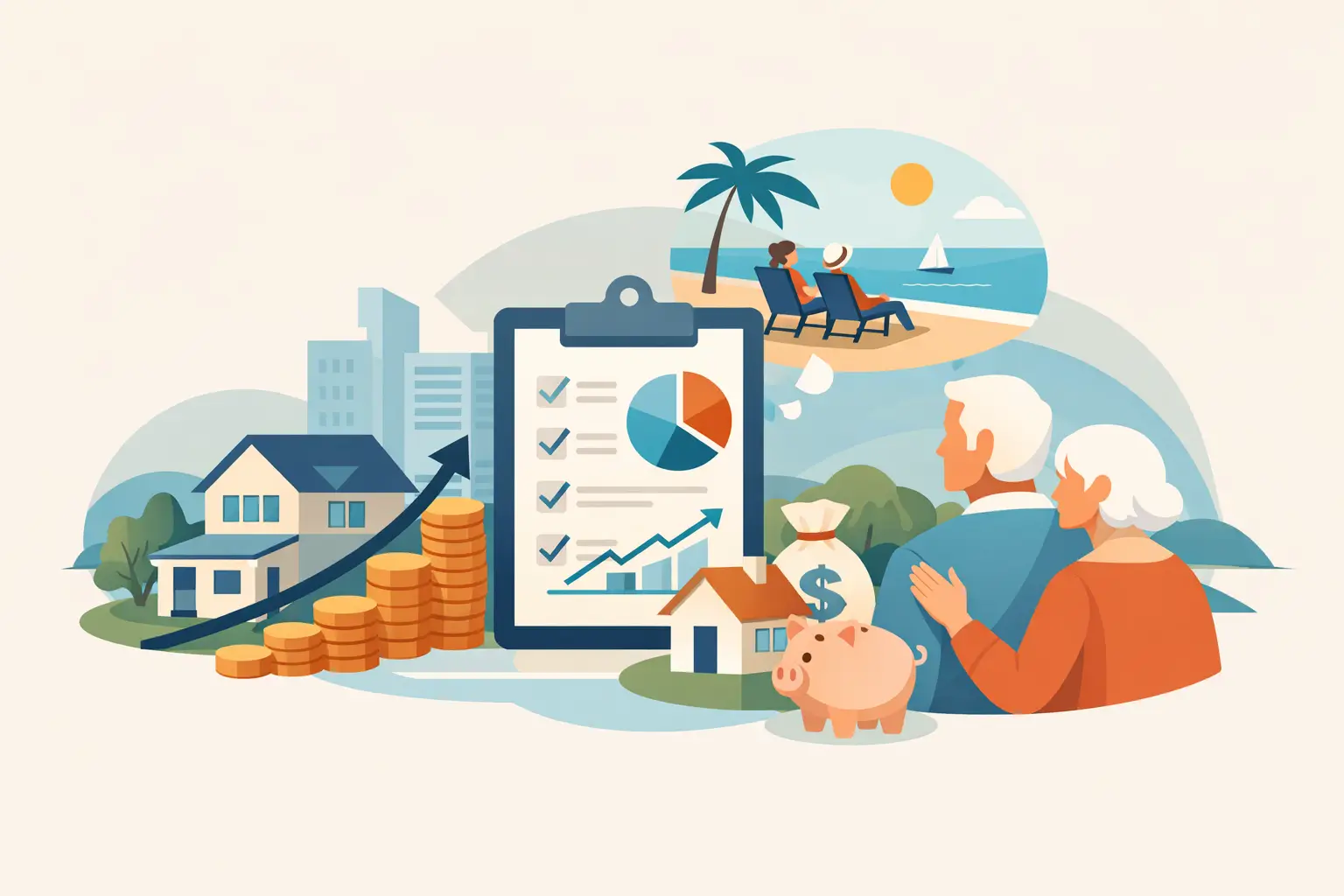
A lot of people work hard, save consistently, and still feel like their finances are not moving fast enough. The issue is rarely effort. More often, it is the lack of clear wealth building strategies that connect income, savings, debt, and assets into one plan.
That matters even more when property is involved. For many families, a home is the biggest financial commitment they will ever make. Yet too often, it is treated only as a place to stay, not as part of a larger wealth plan. If you want stronger financial progress, the goal is not simply to own property. The goal is to make every major money decision support your long-term net worth.
Why most wealth building strategies fail in real life
On paper, wealth sounds simple. Spend less than you earn, invest the difference, and wait. In real life, people have mortgages, children, aging parents, changing jobs, and rising costs. A strategy that ignores these realities may sound smart but often breaks under pressure.
Another common problem is fragmentation. Someone may have savings in one place, insurance in another, a home loan they barely review, and vague hopes of upgrading someday. None of these pieces are wrong on their own. The problem is that they are not working together.
This is where a more structured approach matters. Strong wealth building strategies are not built on hype or shortcuts. They are built on coordination. Your income growth should strengthen your savings. Your savings should improve your financing position. Your financing should support asset ownership. And your asset choices should increase flexibility over time, not trap you.
Wealth building strategies should start with cash flow, not property dreams
Before talking about investments or upgrading, start with one question: how much control do you have over your monthly cash flow?
Many people look at wealth from the outside. They see someone who bought a better home, owns an investment property, or seems financially ahead. What they do not see is whether that person has strong monthly control or is just carrying bigger obligations.
A healthy cash flow position gives you choices. It allows you to handle loan payments comfortably, continue saving, and absorb life changes without panic. Without this base, even a good asset can become stressful.
This is why disciplined planning matters more than chasing the biggest property you can technically afford. Affordability is not just whether the bank approves the loan. It is whether the purchase supports your life, your family, and your future options.
The 4-part framework behind smarter wealth building
One practical way to think about wealth progression is through four connected drivers: loan principal repayment, income progression, personal savings, and capital profit. These are not abstract concepts. They are the engine behind many successful property-led wealth journeys.
1. Loan principal repayment builds forced equity
Every mortgage payment is not the same. A portion goes to interest, and a portion reduces the principal. That principal repayment matters because it slowly converts debt into ownership.
This is one reason property can become a useful wealth-building tool for disciplined households. While many people struggle to save manually every month, a mortgage can act as a form of forced capital accumulation. Over time, that creates equity you can measure.
But there is a trade-off. Forced equity only helps if the asset itself is appropriate for your budget and long-term plan. If the loan is too heavy, the same structure that builds wealth can also strain your lifestyle and reduce flexibility.
2. Income progression should not disappear into lifestyle inflation
As your salary grows, your financial capacity grows too. The question is whether that extra income builds wealth or simply increases spending.
This is where many working professionals lose momentum. A promotion comes, then a more expensive car, higher recurring expenses, and more casual spending. Income rises, but net worth barely moves.
A better strategy is to direct part of every income increase toward future asset positioning. That may mean strengthening your cash reserves, reducing debt faster, or preparing for your next property move. Progress in income should create progress in financial structure, not just a more expensive monthly routine.
3. Personal savings create timing power
Savings are often treated as passive money sitting on the sidelines. In reality, savings create strategic timing.
When the right opportunity appears, the people who can act are usually the ones who have liquidity. Savings give you room to manage down payments, renovation costs, transition periods, and unexpected expenses. Just as important, they reduce the chance of making rushed decisions from a weak position.
This is especially relevant for families considering a property upgrade. Upgrading is not only about desire. It is about readiness. The difference between a stressful upgrade and a strong one often comes down to whether savings were built deliberately in advance.
4. Capital profit turns progression into acceleration
Capital profit is what many homeowners focus on first, but it should come last in the thought process. Yes, price appreciation can create significant gains. But appreciation alone is not a strategy.
The real value comes when capital profit is combined with the first three factors. If you have reduced principal, improved income, and maintained savings, then capital gains can become a powerful accelerator for your next move. Without those foundations, gains can be harder to use effectively.
Property-led wealth building strategies require timing and fit
Not every person should buy immediately. Not every homeowner should upgrade. Not every condo is a smarter move than an HDB. Strategy depends on fit.
For a first-time buyer, the right move may be securing a stable, manageable home while preserving enough cash flow to continue building reserves. For an upgrader, the right move may be identifying whether the next property genuinely improves long-term asset position or simply raises prestige and monthly stress.
For some families, holding a well-chosen property longer may be wiser than making a premature move. For others, waiting too long can mean missing a window where income, age, financing, and market conditions were all aligned.
That is why broad advice often falls short. Good planning is personal. It has to consider family needs, career stage, debt profile, holding power, and future goals such as retirement or children’s education.
Common mistakes that weaken long-term wealth
One mistake is buying based on emotion first and numbers second. It is natural to want a nicer home, a better address, or more space for your family. But if the math is weak, the emotional win can become a long financial burden.
Another mistake is assuming any property purchase automatically builds wealth. Some properties perform better than others. Entry price, loan structure, holding horizon, and exit options all matter.
A third mistake is failing to review strategy after life changes. Marriage, children, job shifts, and aging parents can all change what the right financial path looks like. A plan should be revisited, not set once and forgotten.
How to make wealth building strategies work for your life
Start by measuring where you are clearly. Know your income, monthly obligations, savings position, loan exposure, and current asset value. Many people feel uncertain simply because they have never organized the full picture.
Then ask a better question than, Can I buy? Ask, What does this move improve? A strong financial decision should improve either cash flow stability, equity growth, future flexibility, or long-term net worth. Ideally, it improves more than one.
After that, map your next five to ten years. If your goal is family stability, retirement planning, or eventual upgrading, your current property decision should support that path. This is the kind of strategic thinking that separates ownership from wealth planning.
For readers who want a more structured lens, Nurayat’s advisory approach centers on exactly this kind of progression: using property not as a one-time purchase, but as part of a disciplined wealth journey anchored in clarity and planning.
What lasting wealth really looks like
Lasting wealth is usually less dramatic than people expect. It is not built from one perfect deal or one lucky market cycle. It is built from repeated, disciplined decisions that strengthen your position over time.
The strongest households are often not the ones making the flashiest moves. They are the ones who understand their numbers, stay patient, and make each step count. They use debt carefully, grow savings intentionally, and treat property as one part of a broader plan rather than a trophy.
If you are serious about building wealth, start where you are. Get clear on your financial structure. Make your next move serve a larger purpose. When your income, savings, financing, and property choices begin working together, progress starts to feel less random and far more reliable.
A good strategy does not just help you buy the next home. It helps you build a life with more options, more confidence, and more control.